RoboGo
Challenge
Rehabilitating a working port is one of the least forgiving jobs in construction. The concrete that needs inspecting sits underwater, beneath an active terminal, in poor visibility — and traditionally it means sending divers into confined spaces under a pier while cargo operations continue overhead.
RoboGo replaces that with an autonomous pontoon: a remote-operated platform carrying robotic arms that inspects, cleans, repairs and waterproofs reinforced concrete marine structures without putting divers inside them. The system was deployed on the rehabilitation of Dock No. 7 at the Port of Trieste.
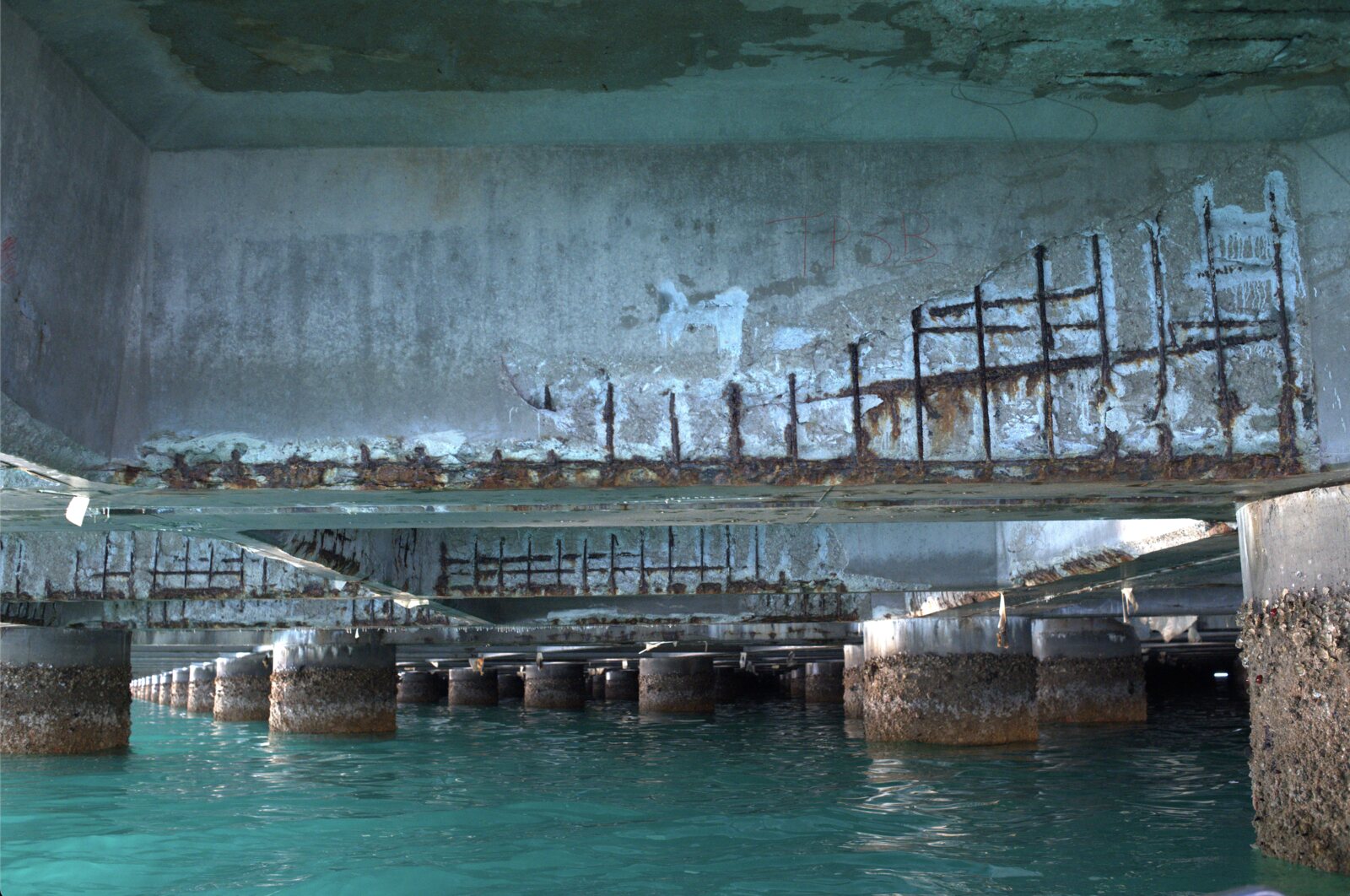
Beneath the pier deck: the confined, low-visibility environment the platform operates in — previously the workplace of divers.
Giving that platform the ability to see is where the difficulty lies. Underwater imagery is murky, unevenly lit and full of biological growth. To be useful, the robot has to look at a concrete surface and decide what counts as damage, how severe it is, and where exactly it sits on the structure.
Solution
We worked with F-Technix and Nuvisa on the AI vision and software side of the system, alongside their subsea and mechanical engineering. Nuvisa developed RoboGo for the ICOP Group.
Computer vision pipeline
The core of our contribution is a vision pipeline combining YOLO object detection with Meta’s SAM2 (Segment Anything Model 2):
- Detection identifies damage types — cracks, spalling, corrosion, biological growth — in real time from the robot’s camera feeds
- Segmentation produces pixel-accurate masks of the damaged areas, so a repair path can be planned against the actual shape of the defect rather than a bounding box
- Custom training data, annotated from real inspection imagery captured in the operating conditions rather than generic datasets
From pixels to a structure
A detection is only useful if you know where on the pier it is. Spalled concrete with exposed, corroded reinforcement means one thing on a camera frame and another when you can place it on the structure, measure it, and hand a repair crew its coordinates.
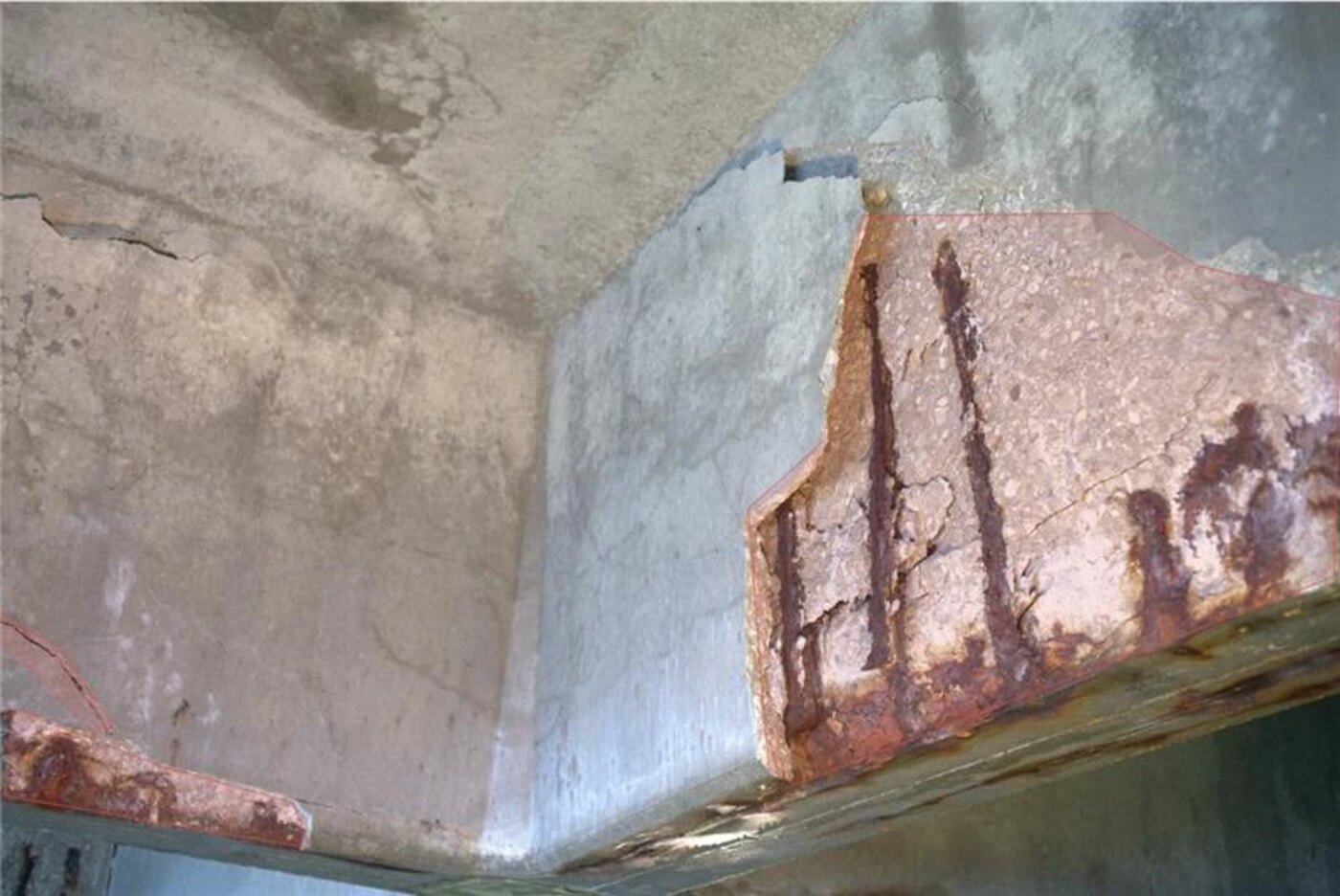
Spalled concrete with exposed, corroded reinforcement — the kind of defect the vision system has to find, outline and locate.
Getting there is a spatial problem before it is an AI problem. Camera poses have to be calibrated against the robot’s own kinematics, and every observation projected into the coordinate frame of the pier. We built tooling to make that chain visible and verifiable — camera frustums, per-image board origins, flange positions and the physical surface in one view, with the disagreement between what the robot thinks and what the camera sees reported in millimetres.
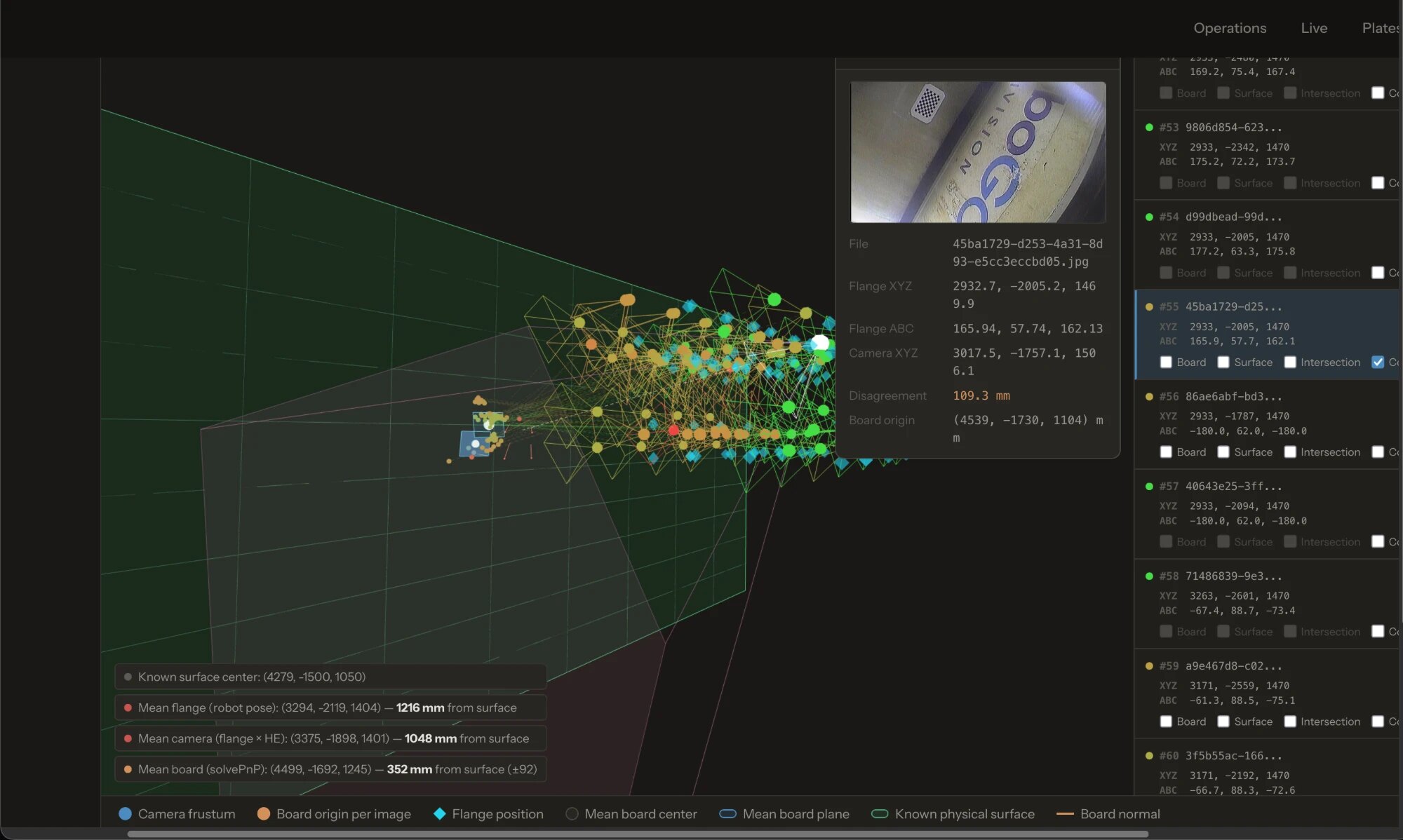
The spatial validation viewer: camera frustums, per-image board origins and flange positions against the known surface, with robot-vs-camera disagreement reported in millimetres.
The result is that damage stops being a picture and becomes a located, measured defect on a known structure.
Robotics integration
The vision system feeds the robotic platform through ROS2:
- Real-time inference nodes publishing detections to the navigation and control stack
- Coordinate transformation between camera frames and the robot’s operational frame
- Repair path planning based on the segmented damage areas
- Sensor fusion combining visual data with sonar and IMU inputs
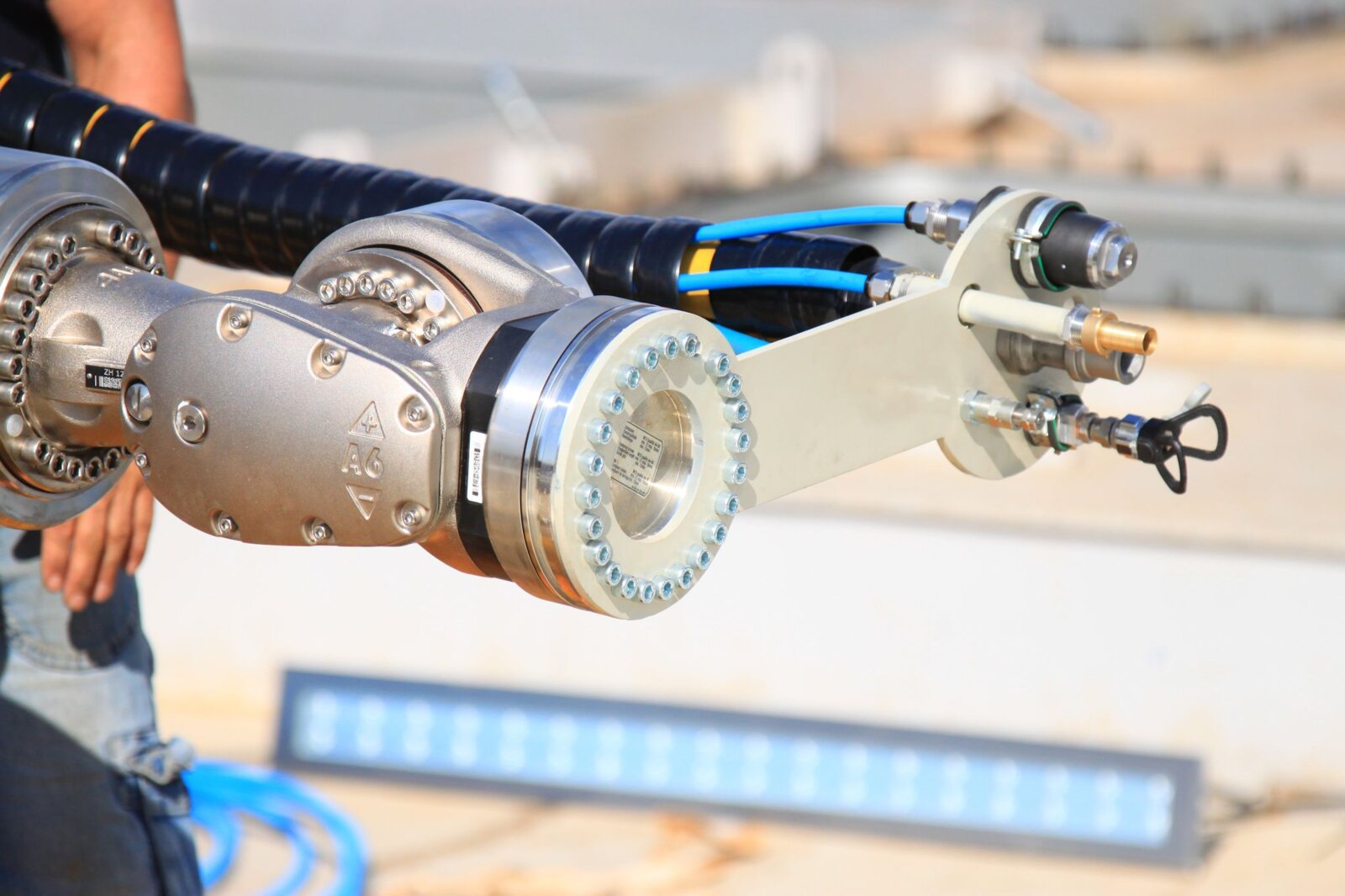
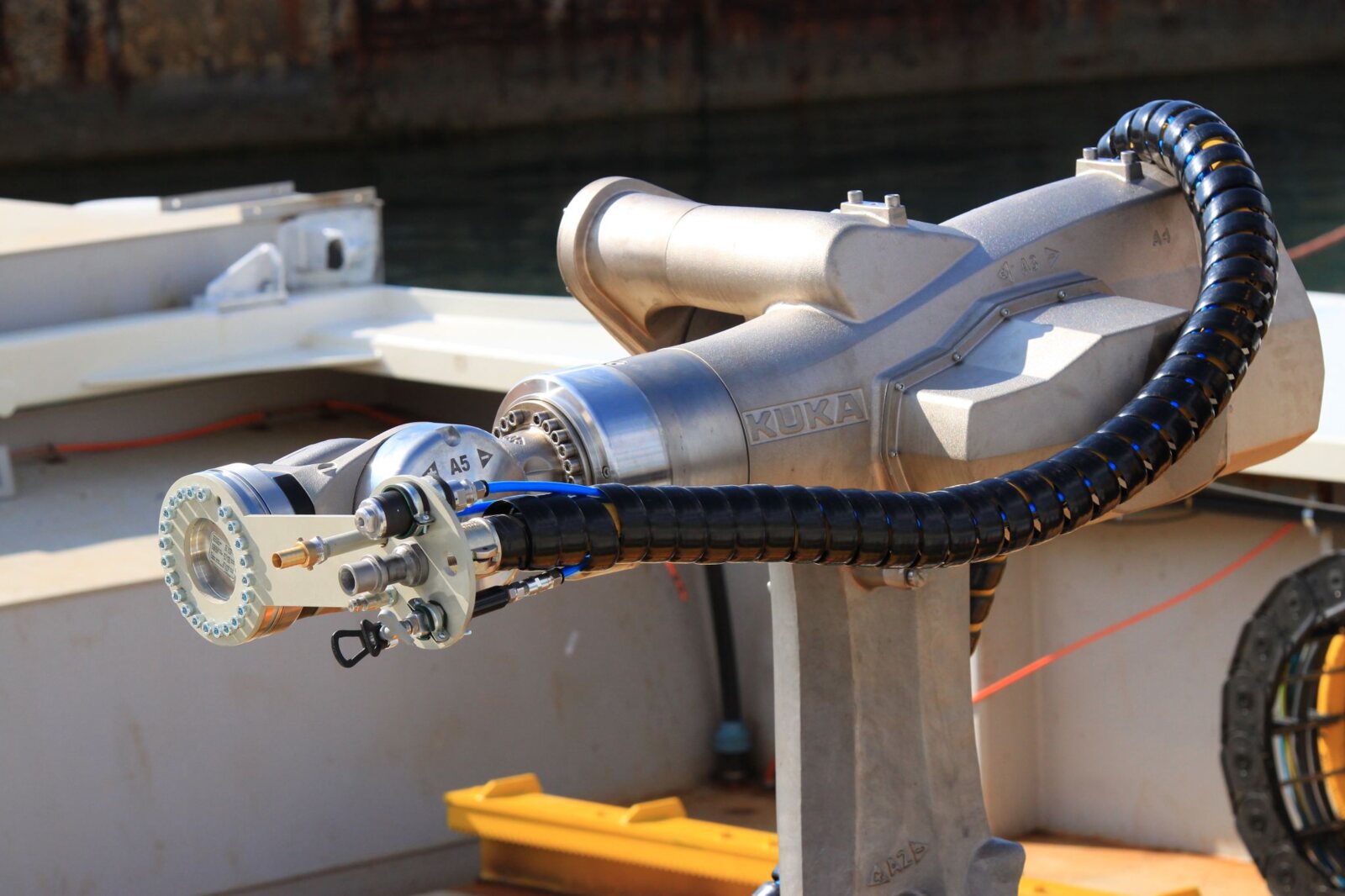
The toolhead, carrying the cameras the vision system sees through.
Supporting infrastructure
Around the AI core we built the software an operator actually works in:
- Operator dashboard for monitoring missions, reviewing inspection results and overriding autonomous decisions
- Data pipeline for collecting, storing and processing inspection imagery at scale
- Reporting engine producing structured inspection reports with damage classification and repair recommendations
- Cloud and edge deployment, with GPU-accelerated training in the cloud and inference running on the platform in the field
Results
- A working vision system that detects and segments pier damage from live underwater camera feeds
- Inspection that previously required divers in confined, low-visibility spaces can be carried out by the platform
- Damage located and measured against the structure, not just spotted in a frame
- A reusable training pipeline that keeps improving as more field data is captured